Portraits
What to say when someone's pet dies
When someone's pet dies, you can say: "I'm so sorry about Otis. I know how much he meant to you." Using the pet's name matters more than finding perfect words. Below are lines for every moment after that, from the first text to the anniversary, and the few worth leaving out.
12 min readUpdated
Why is it so hard to know what to say?
Because grief for a pet rarely gets the room other grief gets, and people worry about saying too much or too little. You do not need the perfect sentence. Say the pet's name, say you are sorry, and leave space for them to talk, which covers most of what helps.
A pet is part of someone's every day. They are at the door when the key turns, under the table at breakfast, on the end of the bed at night. When they die, the house goes quiet in a way that is hard to explain to anyone who has not felt it.
Many people grieving a pet also feel they are not allowed to, because someone once told them it was only a dog. Your words can undo a little of that. They do not need to be clever, only clear that you know this is a real loss.
Make them yours
Use the lines that sound like you, and change the names and details to fit. Some people want to talk, some want to sit quietly, and some would rather change the subject. Follow their lead.
What can you say in person when someone's pet dies?
Something short and warm, said while you look at them. "I'm so sorry about Otis" is enough to open the door. Then let them choose what to talk about, whether that is the pet, the last day or nothing much at all.
- "I'm so sorry about Otis. I know how much he meant to you."
- "I heard about Mabel. How are you holding up today?"
- "I keep thinking about the way Pepper used to meet you at the gate."
- "Will you tell me about him? I'd like to hear."
- "You don't have to say anything. I just wanted you to know I'm thinking of you."
If you knew the pet, one small, specific memory is worth more than any general comfort. If you did not, say you would be glad to hear about them sometime, and leave it there if they would rather not.
A hug, if that is your relationship, can say the rest. Silence is fine too. You do not have to fill it.
What should you text someone whose pet has died?
A message that asks nothing of them. Keep it to two or three lines, use the pet's name, and say plainly that they do not need to reply. A text is a kind way to reach someone, and for many people it is easier to read than a call is to answer.
- "Just heard about Biscuit. I'm so sorry. No need to reply, I'm just thinking of you."
- "Pepper made our whole street a bit friendlier. I'll miss her too."
- "I'm so sorry about Luna. If you want to talk about her, or not talk at all, I'm here."
- "Sending you so much love. Thirteen years of Bramble is a lot to miss."
- "I saw your message about Moss and I've been thinking about you all morning. I'm so sorry."
- "Would it help if I left some food on your doorstep tomorrow evening? Just a yes or no is fine, and you won't need to come to the door."
Leave open questions like "How are you?" out of the first message, because they can feel like a task when someone is barely holding the day together. A simple offer they can answer with a yes or no is different. It is easy to reply to, or to leave for later.
What do you write in a pet sympathy card?
Two or three sentences: their pet's name, one true thing about them, and that you are thinking of the person. A specific memory turns a card into something kept. If you never met the pet, write about the love you saw between them instead.
- "So sorry to hear about Rosie. She was lucky to be yours, and you were lucky to have her."
- "Thinking of you. I'll always remember Archie stealing the sausages off the barbecue at your birthday."
- "Fourteen years of walks, naps and muddy paws. Nala was so loved, and it showed."
- "The house will feel very quiet without Teddy. Sending love to you all."
To sign off, something plainer than "with deepest sympathy" often reads warmer:
- "Thinking of you, and missing Rosie with you."
- "With love, and here whenever you need me."
- "Holding you and Archie in our thoughts."
Handwrite it if you can. People keep these cards, sometimes in a drawer with the collar, and the handwriting matters as much as the words.
What do you say to a colleague or acquaintance?
Keep it brief, kind and private. A short message or a quiet word acknowledges the loss without making them talk about it at work. Something like "I was sorry to hear about Max" is enough, and it will mean more than you expect.
- "I was sorry to hear about Max. I hope you're being kind to yourself this week."
- "I heard about your cat. I'm really sorry. I'm happy to cover the Monday call if that helps."
- "No need to reply. I just wanted to say I'm sorry about Ziggy."
- For a team card: "Thinking of you and remembering Ziggy. From all of us."
- For a neighbour: "We'll miss seeing Bonnie in your front window every morning. We're so sorry."
If you do not know the pet's name, ask someone who does, or write "your dog" or "your cat". A wrong name hurts more than no name.
What do you say if you never met their pet?
Talk about what you saw from the outside: the stories they told, the pictures they showed you, the way their face changed when they mentioned them. You do not need to have known the pet to know what the pet meant to them, and saying so is honest.
- "I never got to meet Juno, but I know from every story you told how much she meant to you."
- "I always liked it when you showed me pictures of Bear. I'm so sorry he's gone."
- "You talked about Hazel like family, because she was. I'm sorry."
Asking about the pet is often the kindest move here. It tells them the loss is worth hearing about, from someone with no memories of their own to offer.
What do you say when a pet was put to sleep?
Acknowledge how hard the decision was and how much care they gave, without passing judgement on it. Many people turn the choice over for a long time afterwards, so leave out any comment on the timing. Let them know they do not need to explain it, and that you are there if they want to talk.
- "I'm so sorry about Charlie. That's such a hard decision to have to make."
- "Losing him is hard enough without having to make that choice too. Sending you so much love."
- "I saw how carefully you looked after her."
- "You don't need to explain anything to me. I'm just so sorry."
Be careful with "you did the right thing" if you are not sure they believe it yet. It can sound like a verdict on something they are still turning over. Words about their care and their love land more softly.
Do not press them on whether they were there at the end. If they bring it up themselves, listen without judging.
What do you say after a sudden or accidental death?
Say less, and avoid pressing for details. A sudden loss often comes with shock and self-blame, and questions about how it happened can feel like an investigation. Tell them you are sorry and that you are there, and if they want to explain what happened, listen without questioning what they did.
- "I'm so sorry about Fudge. It's so hard when it happens out of nowhere."
- "I can't imagine the shock. Don't worry about replying, I'll check in tomorrow."
The first few days often bring a lot of messages, and then they thin out. Keep in touch after that, when things go quiet.
How do you talk to a child whose pet has died?
Simply, truthfully and in words suited to their age. Say "died" rather than "went to sleep" or "went away", which can confuse or frighten younger children. Share a little at a time, invite their questions, expect to answer the same ones more than once, and tell them that feeling sad, cross or not much at all is allowed.
- "I have some sad news. Pip died today. His body stopped working, and he can't come back. It's okay to feel sad."
- "You looked after Pip so well. He loved it when you brushed him."
- "I miss him too. Shall we look at some pictures of him together?"
- "Nothing you did made this happen."
- "Would you like to draw Pip, or tell me your favourite thing about him?"
Children often grieve in short bursts, sad one minute and playing the next. That is normal, and it does not mean they have stopped missing their pet.
If the pet was put to sleep, tell them plainly what happened, in a few short sentences.
Avoid the phrase "put to sleep" with young children, because sleep itself can start to feel frightening. Your vet can help you find the right words.
What should you avoid saying when a pet dies?
Lines that make the loss sound small, hurry them through it or turn the talk towards you. "It was only a dog", "you can always get another" and "I know exactly how you feel" are usually meant kindly and land badly. If a line would sound wrong said about a person, think twice before saying it about their pet.
| Instead of | Try | Why |
|---|---|---|
| "At least it was only a cat." | "I know how much Mabel meant to you." | Grief follows the bond, not the species. |
| "Will you get another one?" | "If you'd like to tell me about Mabel, I'd love to listen." | It suggests the pet can be replaced. Let them raise it. |
| "I know exactly how you feel." | "I can't know how this feels for you, but I'm here." | Every bond is different, and it keeps the focus on them. |
| "Everything happens for a reason." | "This is so unfair. I'm sorry." | A reason rarely helps. Being heard usually does. |
| "She's in a better place now." | "I'm so sorry. I know how much you'll miss her." | Not everyone shares the belief, and it can sound like the pain should stop. |
| "At least you still have Rex." | "I'm so sorry. There's only one Mabel." | Another pet is a comfort, not a replacement. |
| "What happened? Did nobody notice?" | "I'm so sorry. You don't need to tell me anything." | Pressing for details can sound like blame. |
| "Are you still upset about it?" | "I was thinking about Mabel today." | Grief has no deadline. Saying the name shows you have not forgotten. |
What do you say weeks or months later?
Something, because most people stop saying anything. A short message a few weeks on, on the anniversary, or on the pet's birthday or gotcha day tells them the pet is still remembered. It is rarely too late to say their name.
- "Thinking about Otis today. I hope you're doing okay."
- "A year today since you lost Mabel. I still think of her every time I pass the park."
- "I saw a spaniel with exactly Bramble's ears this morning and thought of you."
- "Thinking of you and Juno on her gotcha day. Sending love."
Put the date in your diary when you hear the news. A message on the anniversary is a small thing to send and a large thing to receive.
What can you do that helps more than words?
Offer one specific thing rather than "let me know if you need anything", which leaves the work with them. Bring food, take over a task, or keep them company at the time of day the pet used to fill. Ask first, in a way that needs only a yes or no.
- Name a day and a thing. "Would you like me to bring soup on Thursday?" is easier to answer than an open offer. Wait for a yes before you turn up.
- Fill the walk. If they walked their dog every morning, that hour may feel especially empty now. Offer to walk with them, the old route or a new one.
- Help with the things, when they are ready. The bed, the bowls, the lead by the door. Some people clear them at once and others keep them for months, so ask, and do what they choose.
- Look after the other pets. A cat or dog left behind may be unsettled too. Offering to sit with them, or walk them, is real help.
- Make the awkward calls. Telling the groomer, the dog walker or the vet's reminder service is a small job that hurts. Offer to do it for them.
Should you give them something to remember their pet?
Only if you are reasonably sure it would be welcome. A written memory or a photo you took of their pet costs nothing, and if you'd like to spend something, a donation to a rescue in the pet's name is another way to remember them. Something to keep on the wall can come later, when they are ready.
- A memory, written down. A paragraph about a day you spent with their pet. They will read it more than once.
- A photo they might not have. If you took a picture of their pet at your house, on a walk or at a party, print it or send it. It may be one they have never seen.
- A donation in the pet's name. To a rescue, a shelter, or the charity that brought them together. Tell them in a card, and leave out the amount.
- Something that grows. A plant or a few bulbs for the spot in the garden their pet liked best.
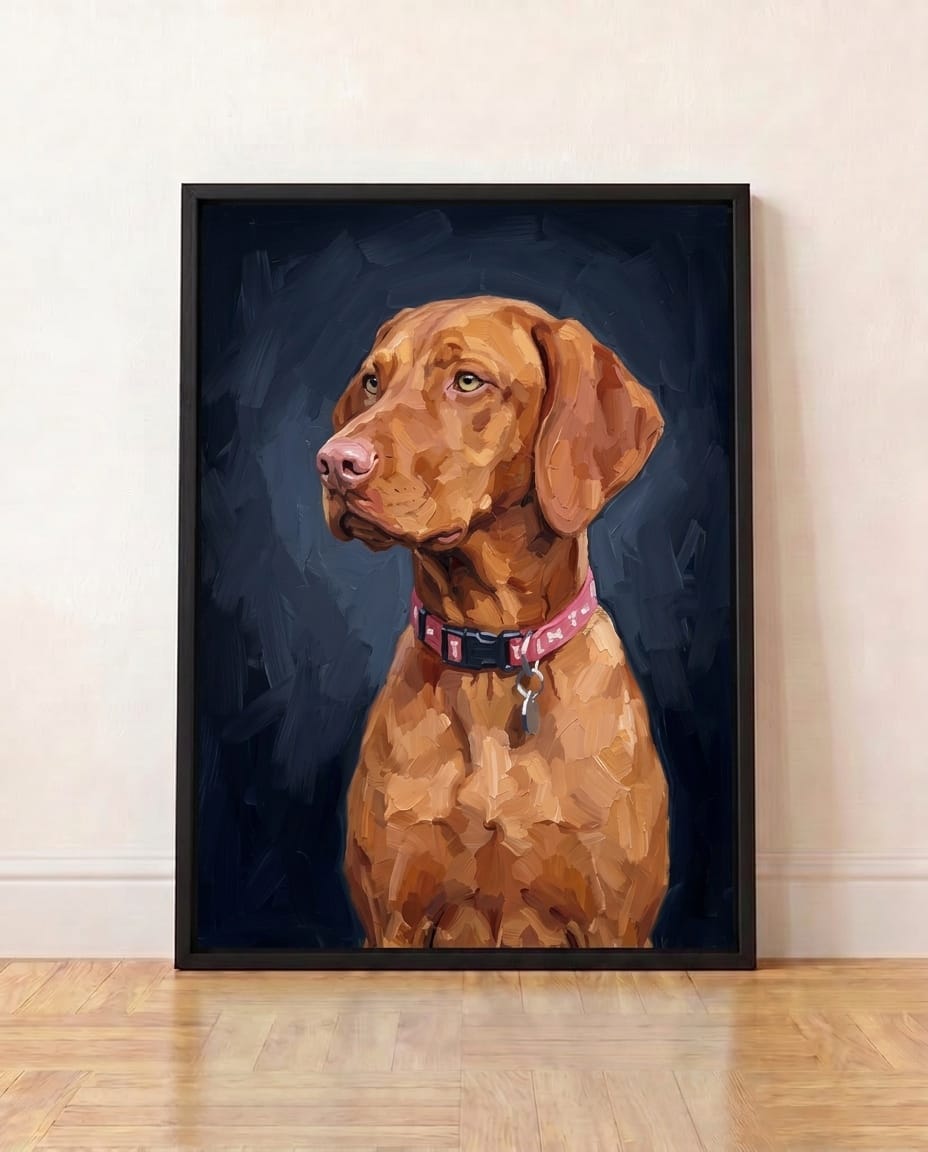
A portrait is a bigger gift, and it suits some people more than others. Some want their pet on the wall within days. Others cannot look at photos for months, so if you are unsure, wait.
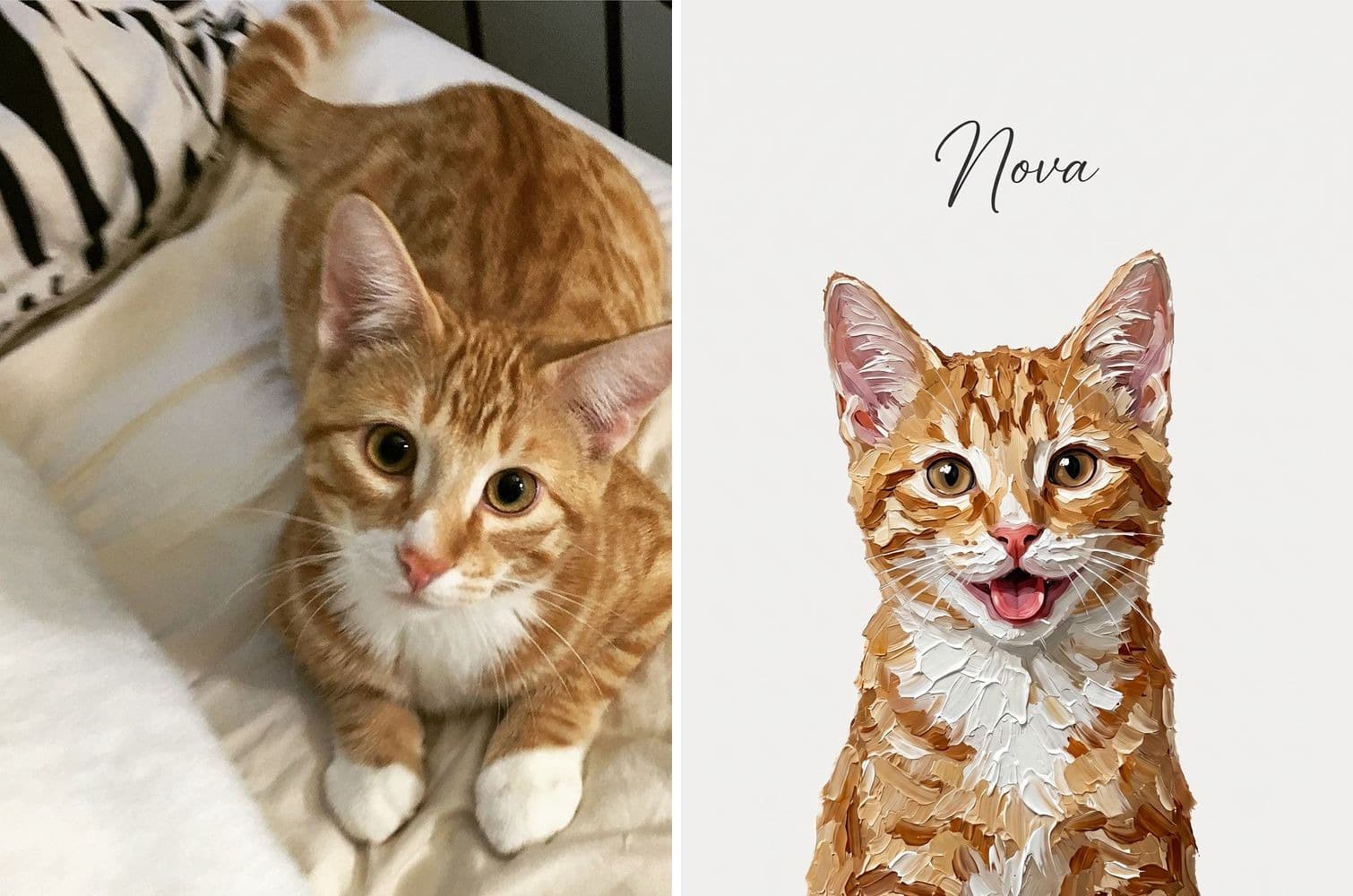
If you do choose one, any clear photo you already have will work, however old, and with a separate photo of each pet, theirs can appear alongside the pets still at home. The preview is free and private, so you see it before deciding anything, and if a detail like a marking is wrong in the preview, tell us and it is corrected.
When they are ready
Our guide to pet memorial portraits covers choosing the photo and how to give one gently.
Common questions
Is it normal to grieve a pet as much as a person?
Yes. A pet shares someone's home and routine every day, often for many years, and grief follows the bond rather than the species. Nobody needs permission to feel it.
How long does grief for a pet last?
There is no set length. For many people the sharpest part eases over weeks or months, while dates and small reminders can bring it back for years, and neither means something is wrong. If it ever feels too heavy to carry alone, Blue Cross Pet Loss Support is there to listen.
Is it okay to send a text instead of calling?
Yes. A text lets them read it when they can and reply when they want to, or not at all. Tell them they do not need to answer.
Should you mention getting another pet?
Not unless they raise it. When they do, follow their lead, and never talk about a new pet as a replacement for the one who died.
What if you only found out weeks later?
Say something anyway. "I've only just heard about Mabel, and I'm so sorry" is usually welcome, and a late message often arrives just as the others have stopped. If they have asked for some space, respect that.
Is it okay to say "rainbow bridge"?
If they use it themselves, yes, and follow their lead. Otherwise, "I'm so sorry about Pip" says it without assuming what they believe. With young children, say "died" rather than "lost".
What if you've already said something unhelpful?
Apologise briefly, without asking them to reassure you: "I'm sorry I mentioned getting another pet. That was thoughtless. I know how much Mabel meant to you." Then listen. It may not mend everything, but it brings the conversation back to them.