Photography
How to photograph your pet for a portrait
The photo does most of the work. Get these right and the likeness follows.
6 min readUpdated
What makes a good photo for a pet portrait?
Daylight, eyes open and in focus, camera held at their eye level, face filling a good part of the frame, and nothing overlapping their features. Those five things account for almost every difference between a portrait that looks like your pet and one that does not.
Everything below is detail on those five. If you only do one thing, take the photo outside or beside a window instead of under a ceiling light.
What light should you use?
Soft daylight. Outdoors on an overcast day is ideal, and beside a window is the next best thing. Avoid flash, avoid direct midday sun, and avoid ceiling lights, all of which either flatten the fur or throw hard shadows across the face.
- Overcast daylight is the most forgiving light there is. Bright but diffuse, no hard shadows, and it shows the true colour of the coat.
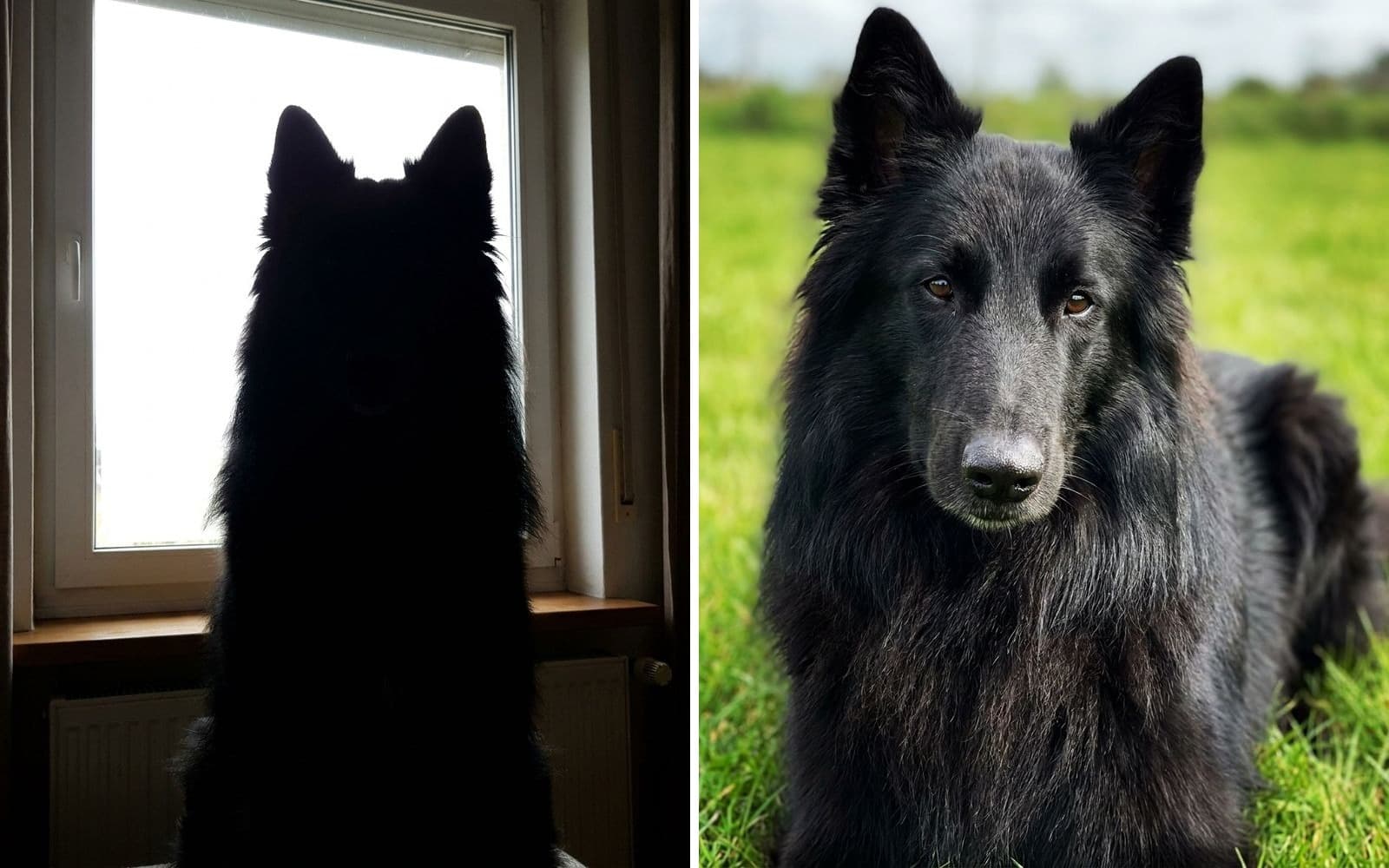
- Window light works well indoors. Put your pet facing the window rather than in front of it, or you get a silhouette.
- Flash is the one to avoid. It flattens texture and shifts colour, and it is the most common reason a portrait comes back looking like a different animal.
- Direct midday sun carves hard shadows under the brow and muzzle, which then get painted in as if they were markings.
What angle should you shoot from?
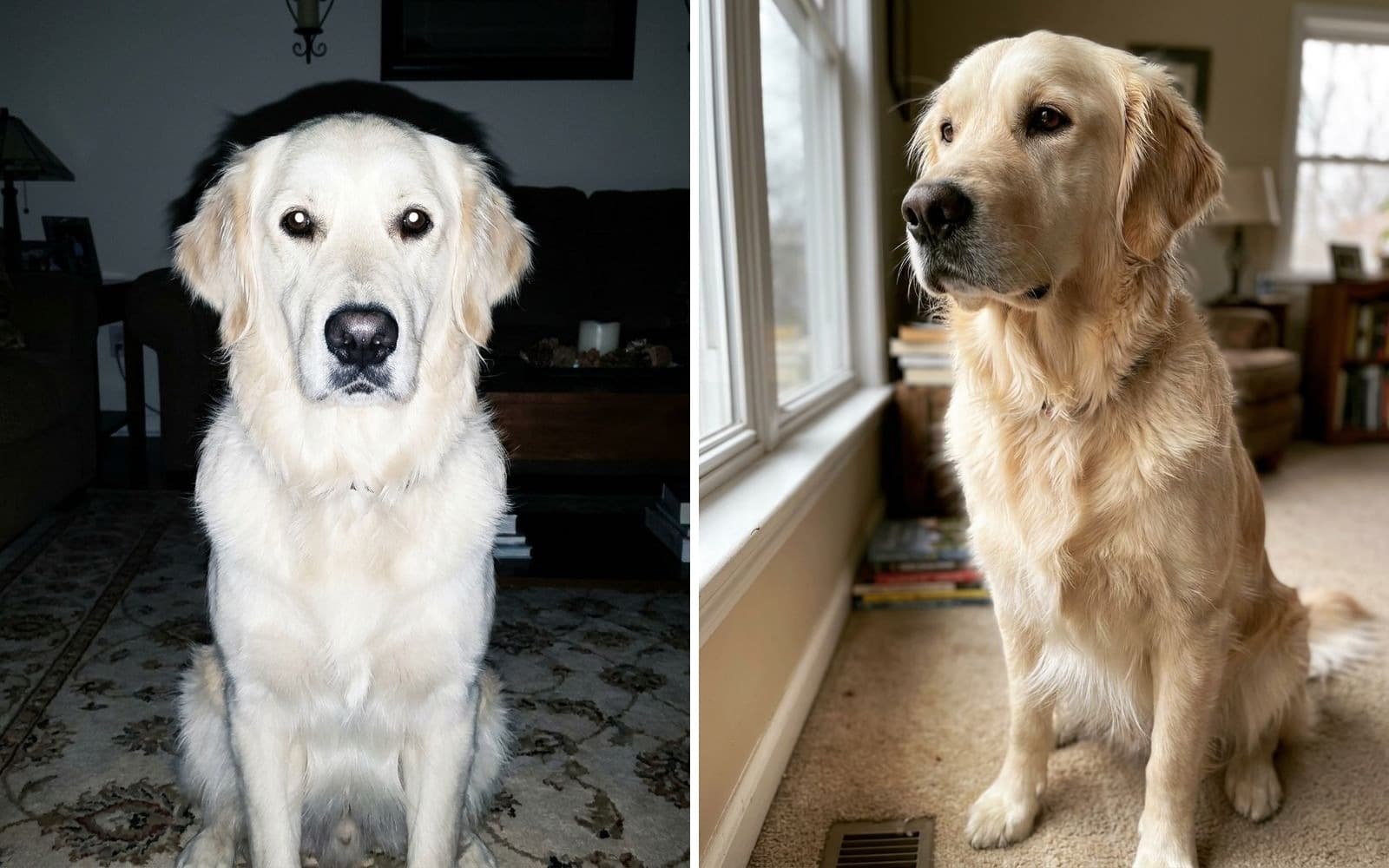
Their eye level, not yours. Crouch, kneel, or put the phone on the floor. Photographing down at a pet from standing height shortens the muzzle and enlarges the top of the head, which makes the proportions read as wrong even when the likeness is close.
This is the single change that most improves the photos people send us, and it costs nothing. The difference between a photo taken from standing height and the same photo taken from the floor is the difference between a snapshot and a portrait.
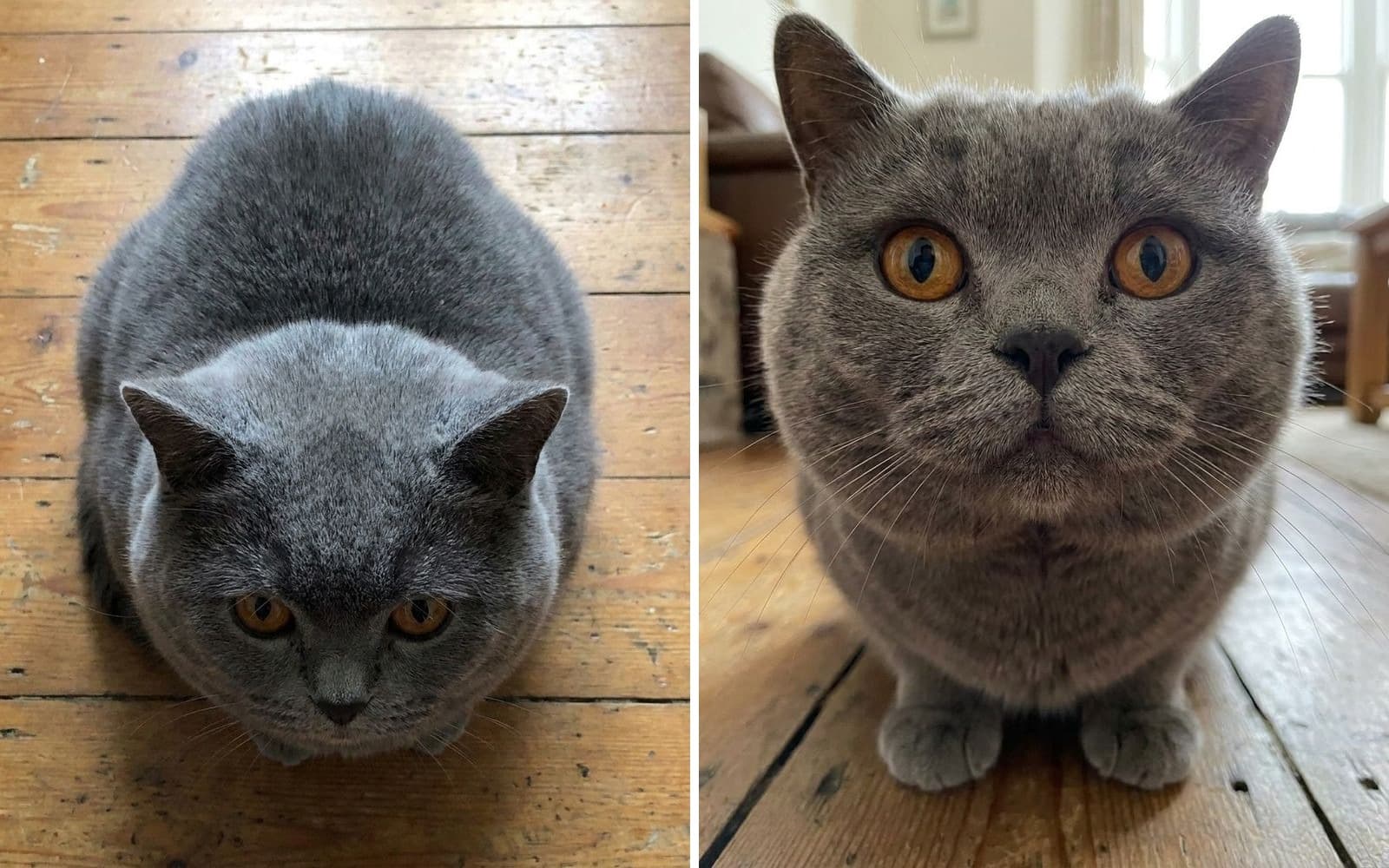
For small pets and cats
Getting to eye level often means lying down. Put the phone on the floor, use the volume button as the shutter, and let them come to you.
How do you photograph a black dog or cat?
Give them more light than feels necessary and put it to one side rather than straight on. Tap their face on your screen so the phone exposes for the coat instead of the background. Most phones underexpose black animals into a silhouette by default.
Black coats are the hardest thing to photograph, and the problem is metering rather than the camera. Your phone averages the whole scene, so a black dog in front of a bright window becomes a shape with no face in it.
- Go outside on a bright but cloudy day if you can.
- Put the light to one side. Side light is what reveals the shape of a dark coat.
- Tap their face on the screen to set exposure there.
- Raise the exposure slider before you shoot rather than brightening the photo afterwards, which just amplifies noise.
What if your pet has unusual markings?
Photograph them straight on and in even light, so the boundary between colours is clear. Merle coats, split faces and asymmetric markings need enough light to show where one colour ends and the next begins, or the pattern gets simplified.
If your pet has a genuinely unusual pattern, it is worth sending a second photo from a slightly different angle. The more clearly the pattern is documented, the more faithfully it comes through.
Which photos should you avoid sending?
Screenshots, social media downloads, anything shot through glass, portrait-mode photos, and pictures with a hand, lead or toy across the face. Each removes information that then has to be invented, and invention is where likeness is lost.
| Avoid | Why |
|---|---|
| Screenshots | Compressed twice, fur detail already gone |
| Social media downloads | Re-compressed and often cropped |
| Shot through a window or car glass | Reflections sit on top of the coat |
| Portrait mode | Softens the edge of the fur into a halo |
| Anything across the face | What is hidden has to be invented |
| Already filtered | The filter is baked into the artwork |
Always send the original file rather than a version that has passed through a messaging app, which will have compressed it on the way.
How do you get a pet to look at the camera?
Make a new sound rather than a familiar one. A squeaky toy, a crinkled wrapper, or a noise they have never heard buys you about two seconds of direct attention. Shoot a burst during those two seconds rather than trying for one frame.
Their name usually does not work, because they have heard it ten thousand times and it does not carry novelty any more. An unfamiliar sound does.
Hold the burst button and take fifteen frames. One of them will have both eyes open, in focus and pointed at you. That is the one.
Does the photo matter more for a watercolour tote?
Yes, more than for anything else we make. Every other product shows you the artwork before you pay. The watercolour tote is painted after you order and sent to you by email, usually within minutes, so the photo you send is the only thing steering it. Everything above still applies, and it applies harder.
- One clear photo of the face beats four average ones. The watercolour tote is painted head and chest only, so a full body shot is mostly detail the painting will never use.
- Daylight matters most here. A flash shifts coat colour, and on a tote that colour is printed into cloth rather than shown on a screen someone can adjust afterwards.
- A busy background is worth avoiding. The painting drops the surroundings, but a pet photographed against a plain wall or open grass comes back cleaner than one half hidden behind furniture.
You still get to change it
The finished watercolour arrives by email before anything is printed, and you have 24 hours to reply and ask for changes. If you say nothing, it goes to print as it is.
Common questions
Do I need a proper camera?
No. Any phone from the last several years has far more resolution than the portrait needs. Light is the limiting factor, not the camera, and a well lit photo on an old phone beats a dim one on a new phone.
Can you work from an old or imperfect photo?
Often, yes. If it is the only photo you have of a pet who has passed away, send it. We would rather work with the photo that matters than a technically better one of a different moment.
How many photos should I send?
One good one is enough. You can send up to four if you want us to have more than one angle, which is worth doing for unusual markings.
Can I check the result before paying?
Yes. You get a free preview before you buy, so you can see the likeness with your own photo first. If it is not right, try a different photo.